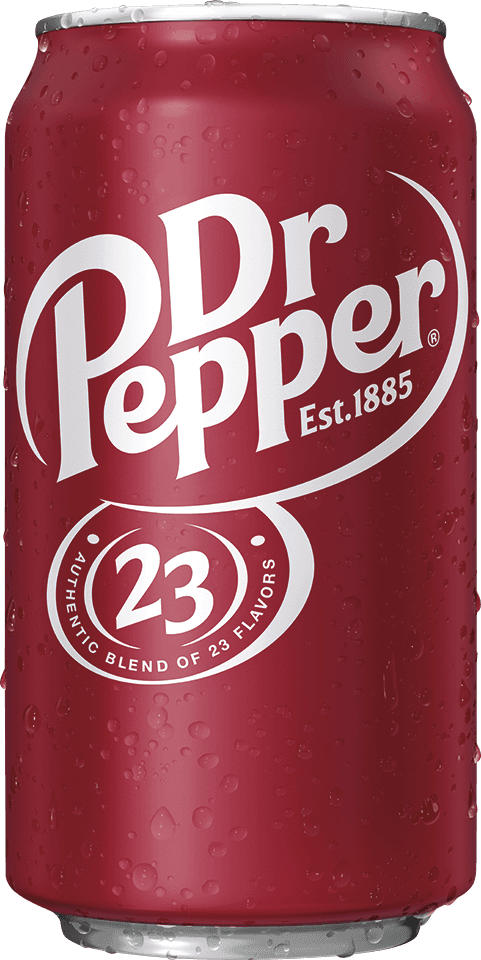
Is Dr Pepper addictive?
Dr Pepper is habit forming, and its caffeine can cause real physical dependence. Each 12 fl oz can has 41 mg, and caffeine withdrawal is a recognized diagnosis in the DSM-5, so a daily habit can bring headaches and fatigue when you stop. The sugar makes it rewarding, but there is little evidence that sugar itself is addictive in humans.
Checked against the Keurig Dr Pepper label and the research cited below on October 7, 2026.
So the “addiction” in this site's name is half a joke. The other half is a real, measurable dependence on the caffeine, and that is the good news: it has a documented course and a short one. If your treat has quietly become a daily requirement, the practical side is on how to cut back on Dr Pepper. For the lighter side, there are the tongue-in-cheek signs of a Dr Pepper addiction and a just-for-fun “am I addicted to Dr Pepper?” quiz that scores you in six tiers.
Can you be addicted to Dr Pepper?
Not in the sense the word usually carries, but the part that hooks people is a real clinical thing. The DSM-5, the American Psychiatric Association's diagnostic manual, treats caffeine withdrawalas a diagnosis in its own right. It does not treat caffeine addiction the same way: caffeine use disorder sits in the manual's “conditions for further study” section, a step short of an official diagnosis, according to a 2013 review led by Johns Hopkins researchers. Nobody is diagnosed with a Dr Pepper addiction. Plenty of people have the caffeine dependence that comes in the can.
How much does it take? A review of 66 caffeine withdrawal studies by Juliano and Griffiths (2004) found that stopping a habit of as little as 100 mg a day produced symptoms. At 41 mg a can, that is about two and a half cans of Dr Pepper a day. Across the experimental studies it reviewed, the incidence of headache was about 50%, and 13% of people had symptoms bad enough to cause clinically significant distress or get in the way of their day.
Why is Dr Pepper so addictive?
Three things stack up, and only the first is chemistry:
- The caffeine sets the clock. The Juliano and Griffiths review concluded that avoiding withdrawal plays a central role in why habitual caffeine users keep going back. Part of what feels like wanting the next can is the start of a withdrawal headache asking to be fixed.
- The sugar makes it a reward, not a drug. A can has 39 g of sugar, and it tastes great. But a 2016 University of Cambridge review found little evidence for sugar addiction in humans. The authors judged that the binge-like behavior seen in animal studies likely comes from intermittent access to sweet, palatable food rather than a drug effect of sugar itself.
- Nothing else tastes like it. The 23-flavor blend has no real substitute, so unlike a generic cola craving, only the actual thing scratches the itch. Add the habit cues (for me it was the drive home and the 3 pm slump) and the reach for a can runs on autopilot.
I broke the craving side down further in why do I crave Dr Pepper.
The caffeine is the hook, the sugar is the cost
What does the long-run damage is the sugar, not the caffeine. At 39 g of added sugar a can, the risks that build up over years are the ones tied to sugar-sweetened drinks generally: tooth decay, weight gain from calories that never register as food, and a raised long-run risk of type 2 diabetes. Caffeine at this dose mostly costs you sleep and a headache on the days you skip it.
The two run on very different clocks. The American Heart Association suggests a daily ceiling of about 25 g of added sugar for women and 36 g for men, so one can puts you past both. The FDA puts 400 mg of caffeine a day in the range generally not associated with negative effects for healthy adults, which is roughly ten cans. If you are anywhere near ten cans, the sugar hit its limit nine cans ago. That asymmetry is why Dr Pepper Zero is a genuinely different proposition, and it is the short answer to whether one Dr Pepper a day is bad for you. The full list of effects is on the health risks of drinking too much Dr Pepper, the per-size caffeine numbers are in how much caffeine is in Dr Pepper, the sugar and calorie figures are in Dr Pepper calories, sugar, and nutrition, and if you are weighing the sugar-free cans against each other, start with Diet Dr Pepper vs Dr Pepper Zero.
Breaking the habit: the withdrawal clock
Caffeine withdrawal starts 12 to 24 hours after the last can, peaks somewhere between 20 and 51 hours, and is usually over in 2 to 9 days. The day-by-day version, and how many cans of any soda it takes to get there, is in what Dr Pepper withdrawal feels like and how long it lasts.
The gentler route is a taper rather than a hard stop: swap regular for Zero Sugar first (same caffeine, none of the sugar, so no withdrawal), then replace one caffeinated can a week with a caffeine free one, and put a glass of water where the can used to be so the reflex has somewhere to land. The full plan, with what to drink instead, is on how to cut back on Dr Pepper.
What is Dr Pepper?
Dr Pepper is the oldest major soft drink in the United States. A pharmacist named Charles Alderton invented it in 1885 at Morrison's Old Corner Drug Store in Waco, Texas, a few blocks from where the Dr Pepper Museumnow stands, and it went national at the 1904 World's Fair in St. Louis. Its taste famously comes from a blend of 23 flavors, a recipe the company has never spelled out. Today it is made and distributed by Keurig Dr Pepper and comes in everything from the original to Zero Sugar, Diet, Cherry, and Cream Soda. It is not a cola, which surprises people often enough that I gave it its own page.
Every Dr Pepper variety, delivered
Here are the packs I reach for most. Every link goes straight to Amazon, so you can restock your favorite Dr Pepper in a couple of clicks.


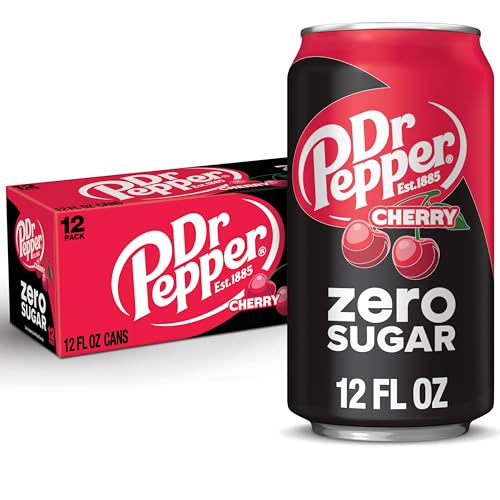

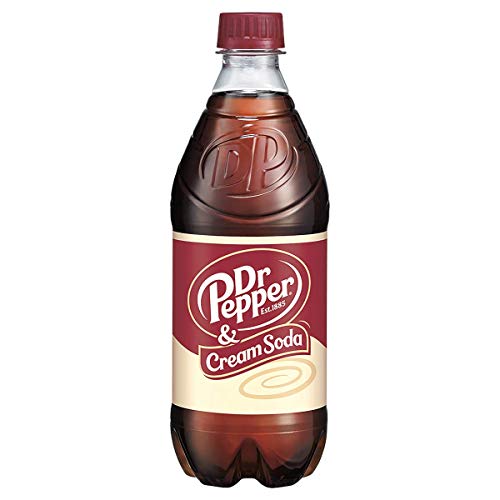
Price and availability as of October 27, 2026 and subject to change. The price shown on Amazon at the time of purchase is the one that applies.
As an Amazon Associate I earn from qualifying purchases. It costs you nothing extra.
Prefer a different flavor? I keep a full page for each one, with nutrition facts and buying options, from Dr Pepper Zero and Dr Pepper Cherry to Dr Pepper Cream Soda. If you are picking one to try next, I ranked them all in the best Dr Pepper flavors.
Explore every Dr Pepper flavor
Learn more about other Dr Pepper products produced by the Keurig Dr Pepper company.
- Dr Pepper
- Dr Pepper Diet
- Dr Pepper Zero
- Dr Pepper Cream Soda
- Dr Pepper Cream Soda Zero
- Dr Pepper Cherry
- Dr Pepper Cherry Zero
- Dr Pepper Cherry Vanilla
- Diet Cherry Vanilla Dr Pepper
- Dr Pepper Strawberries & Cream
- Dr Pepper Strawberries & Cream Zero
- Dr Pepper Blackberry
- Dr Pepper Blackberry Zero
- Dr Pepper Creamy Coconut
- Dr Pepper Creamy Coconut Zero
- Dr Pepper Made with Real Sugar
- Caffeine Free Dr Pepper
- Caffeine Free Diet Dr Pepper
Other questions I get asked
Is Diet Dr Pepper or Zero Sugar addictive too?
The caffeine part, yes. Diet Dr Pepper and Dr Pepper Zero Sugar have the same 41 mg of caffeine per 12 fl oz can as the original, so drinking the same number of cans carries the same potential for caffeine dependence and withdrawal. What they remove is the sugar, which is the part of the can most worth removing, so switching is a good trade for your teeth and waistline but not a way to break the habit itself. Only Caffeine Free Dr Pepper and Caffeine Free Diet Dr Pepper, at 0 mg, take the caffeine away.
How do I know if my Dr Pepper habit is a problem?
The research criteria for caffeine use disorder in the DSM-5 start with three things: a persistent desire or failed attempts to cut down, carrying on despite knowing caffeine is causing or worsening a physical or psychological problem, and withdrawal (or using caffeine to relieve or avoid withdrawal). All three have to show up within a year, together with real distress or impairment. Drinking it every day is not, on its own, any of those. If those three sound familiar, a doctor is the right person to ask, and my page on cutting back is a practical place to start.
Where these numbers come from
I am a Dr Pepper drinker, not a doctor, so nothing here is medical advice and none of it replaces asking one. What I can do is show my working. Every figure on this page traces to one of these:
- Juliano LM, Griffiths RR, “A critical review of caffeine withdrawal”, Psychopharmacology (2004), for the withdrawal symptoms, withdrawal after doses as low as 100 mg a day, the 50% headache and 13% impairment rates, and the onset, peak and duration windows
- Meredith SE, Juliano LM, Hughes JR, Griffiths RR, “Caffeine Use Disorder: A Comprehensive Review and Research Agenda”, Journal of Caffeine Research (2013), for how the DSM-5 treats caffeine withdrawal (a diagnosis) and caffeine use disorder (a condition for further study), and the criteria for the latter
- Westwater ML, Fletcher PC, Ziauddeen H, “Sugar addiction: the state of the science”, European Journal of Nutrition (2016), for the finding that there is little evidence for sugar addiction in humans
- World Health Organization, “WHO calls on countries to reduce sugars intake among adults and children” (2015), for the link between free sugars, weight gain and tooth decay
- Malik VS, Popkin BM, Bray GA, Després JP, Willett WC, Hu FB, “Sugar-sweetened beverages and risk of metabolic syndrome and type 2 diabetes: a meta-analysis”, Diabetes Care (2010), for the raised type 2 diabetes risk with regular sugary drinks
- Keurig Dr Pepper product facts, Dr Pepper 12 fl oz, for the 41 mg of caffeine and 39 g of sugar per can (the Diet, Zero Sugar and Caffeine Free product facts pages give 41, 41 and 0 mg)
- US Food and Drug Administration, “Spilling the Beans: How Much Caffeine is Too Much?”, for the 400 mg a day figure for healthy adults
- American Heart Association, “How much sugar is too much?”, for the 25 g and 36 g daily added-sugar limits
- Harvard T.H. Chan School of Public Health, “Sugary Drinks”, for the long-run weight and type 2 diabetes associations
- Keurig Dr Pepper product information, for the per-can caffeine and sugar figures, checked against the printed label
Last checked and updated October 7, 2026 by the person who writes this site.