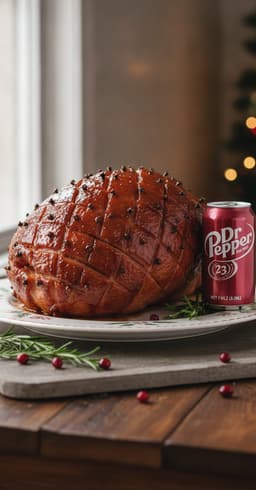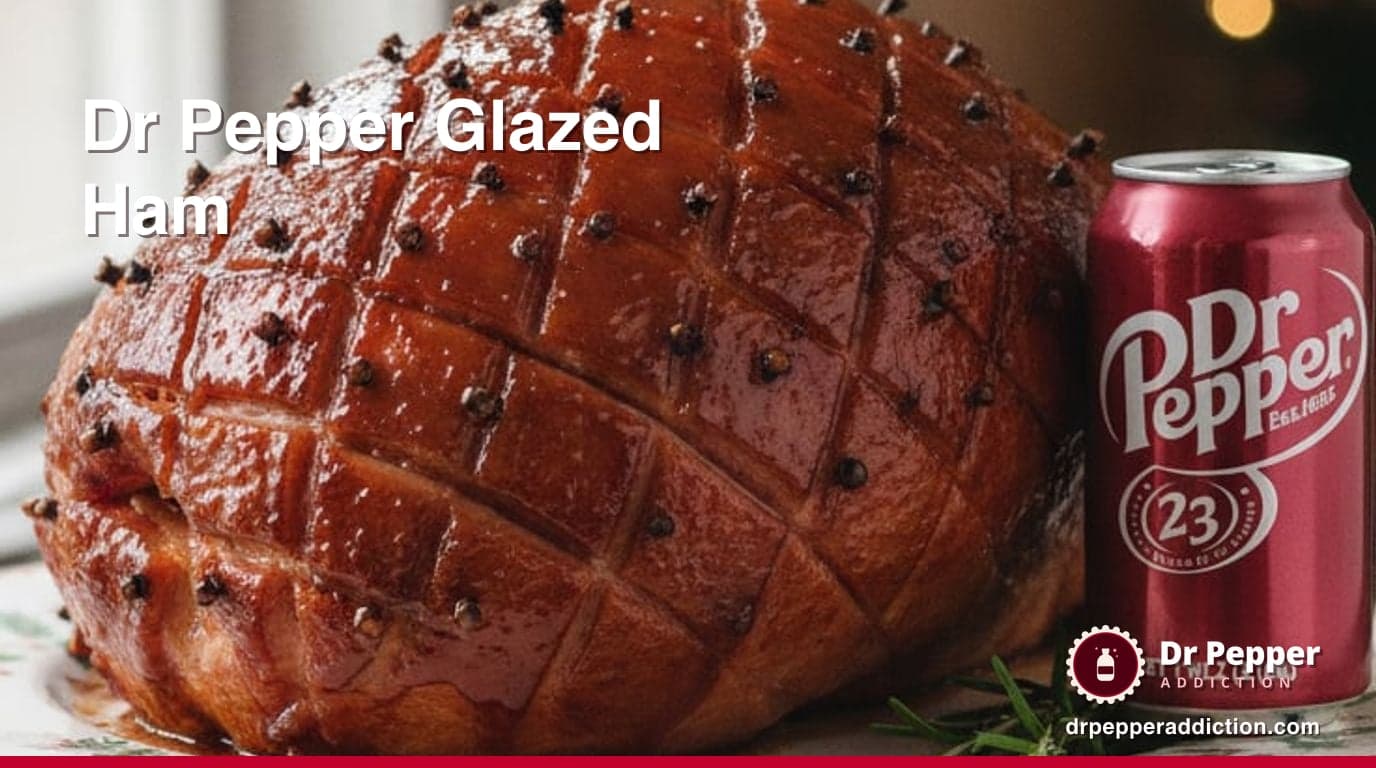
This is the ham to put at the center of the table when the whole family is coming over. A fully-cooked spiral ham does most of the heavy lifting, so the real job is the glaze, a sticky, glossy cola-caramel lacquer brushed on in the final stretch until the whole thing shines. It looks like a project, but it is mostly the oven and a saucepan doing the work while you handle everything else.
The glaze is where Dr Pepper earns its place. Simmered down with brown sugar and a little Dijon, the soda thickens into a syrup that carries a cola-caramel sweetness, a whisper of spice, and just enough mild acidity to keep it from going flat against the salty ham. Each brush builds another sticky layer, and by the time it rests the ham is burnished and deeply flavored. Use classic Dr Pepper here, since its full sugar is what lets the glaze reduce and cling.
Why Dr Pepper works in this recipe
A ham glaze needs to be sweet, sticky, and balanced, and Dr Pepper hits all three. Its sugar reduces into a syrup that clings to the spiral cuts, its deep color gives the ham that lacquered holiday look, and its mild acidity cuts the salt of the meat so each slice stays bright rather than heavy. The warm, faintly spiced character that pairs so well with cloves and cinnamon comes from the famous blend behind the drink, explored in the 23 flavors of Dr Pepper.
When to make it
For Christmas this is a natural centerpiece, since a spiral ham feeds a crowd, slices itself, and the glossy glaze makes the table look like a magazine spread with very little effort. At Easter a glazed ham is the traditional main, and the cola-caramel glaze gives the classic a sweeter, more interesting edge that everyone asks about. For Thanksgiving it works as a second main alongside the turkey, because it bakes on its own timeline and frees up the oven's attention. And for a Sunday dinner, even a smaller ham turns an ordinary weekend into something that feels like an occasion, with leftovers that carry through the week.
Tips and swaps
- Pull the ham at 140°F (60°C). It is already fully cooked, so you are warming it through, not cooking it, and overbaking dries it out.
- Reduce the glaze until it coats the back of a spoon. A thin glaze runs off; a syrupy one clings to every cut. Full measurements are in the recipe card below.
- Brush in layers during the last 45 minutes so each coat caramelizes before the next goes on.
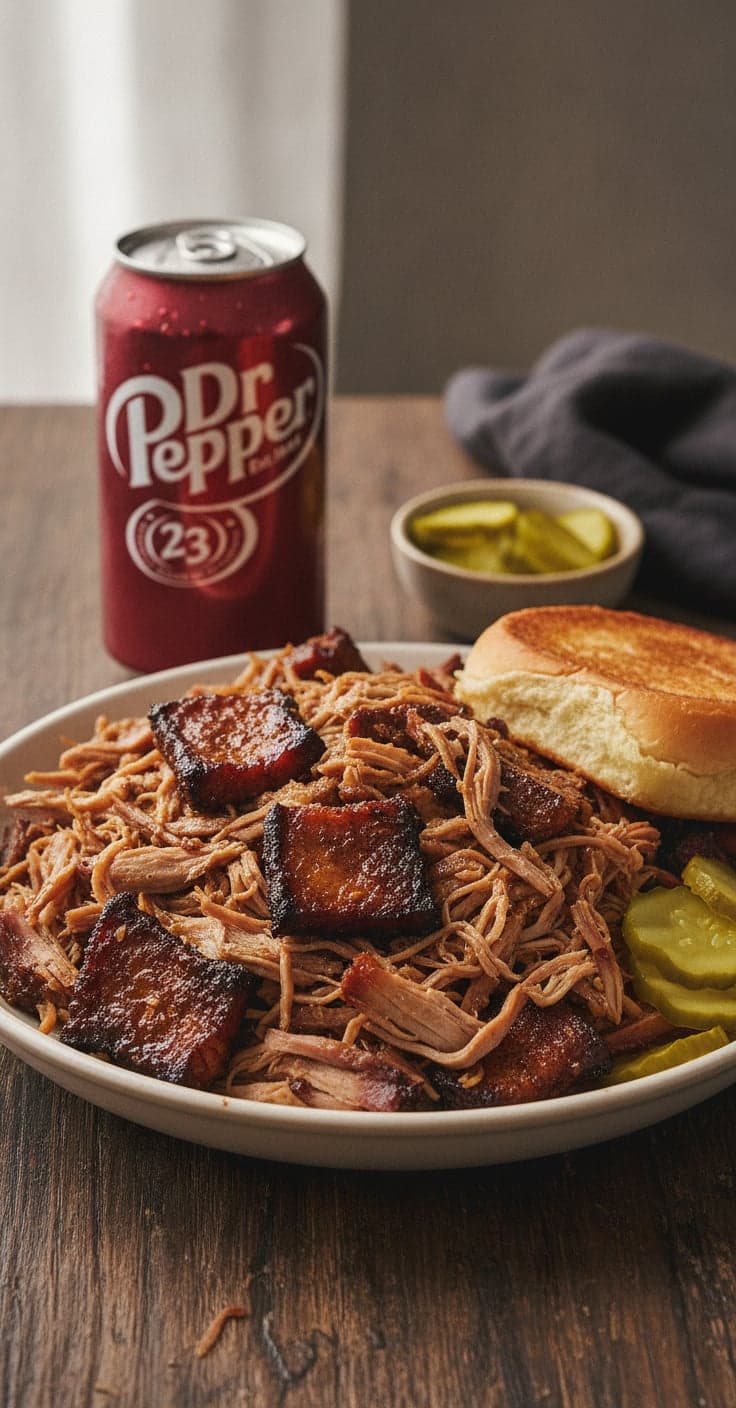
- Spoon the pan juices over the sliced ham at the table, and save the bone for a pot of soup or Dr Pepper baked beans.
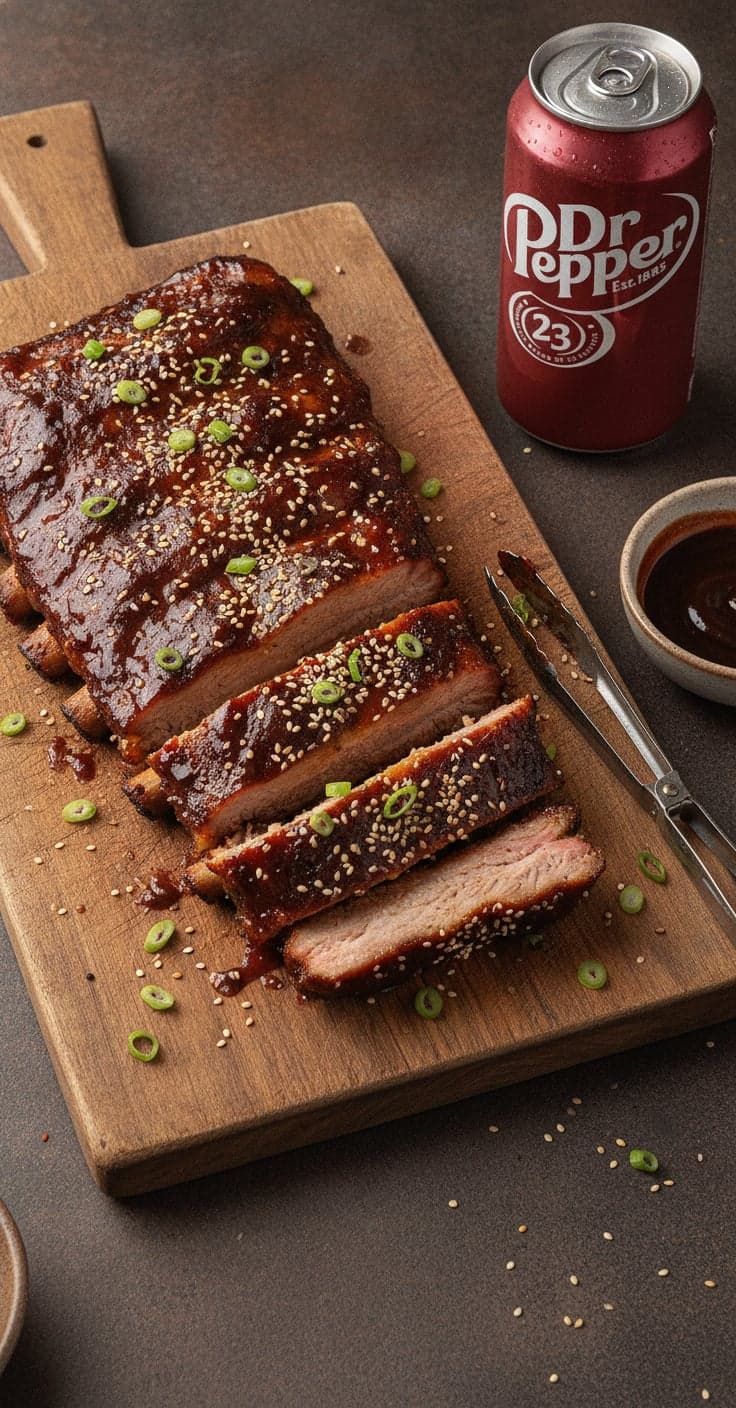
- If you love this style of sweet-savory main, Dr Pepper ribs lean on the same glaze logic for a smokier crowd-pleaser.
Frequently asked questions
Can I taste the Dr Pepper in the glaze?
You taste it as a warm, spiced caramel sweetness rather than as soda. Reduced down with the brown sugar and spices, it reads as a rich holiday glaze, not a fizzy drink.
How long does a ham take to heat through?
Plan on roughly 12 to 15 minutes per pound at 325°F, so a 10 lb ham runs about 2 to 2.5 hours total. Always go by the 140°F internal temperature rather than the clock.
What should I serve with it?
Classic sides like scalloped potatoes and green beans are naturals, and Dr Pepper baked beans add a smoky-sweet partner. You can find more pairings over on the recipes hub.