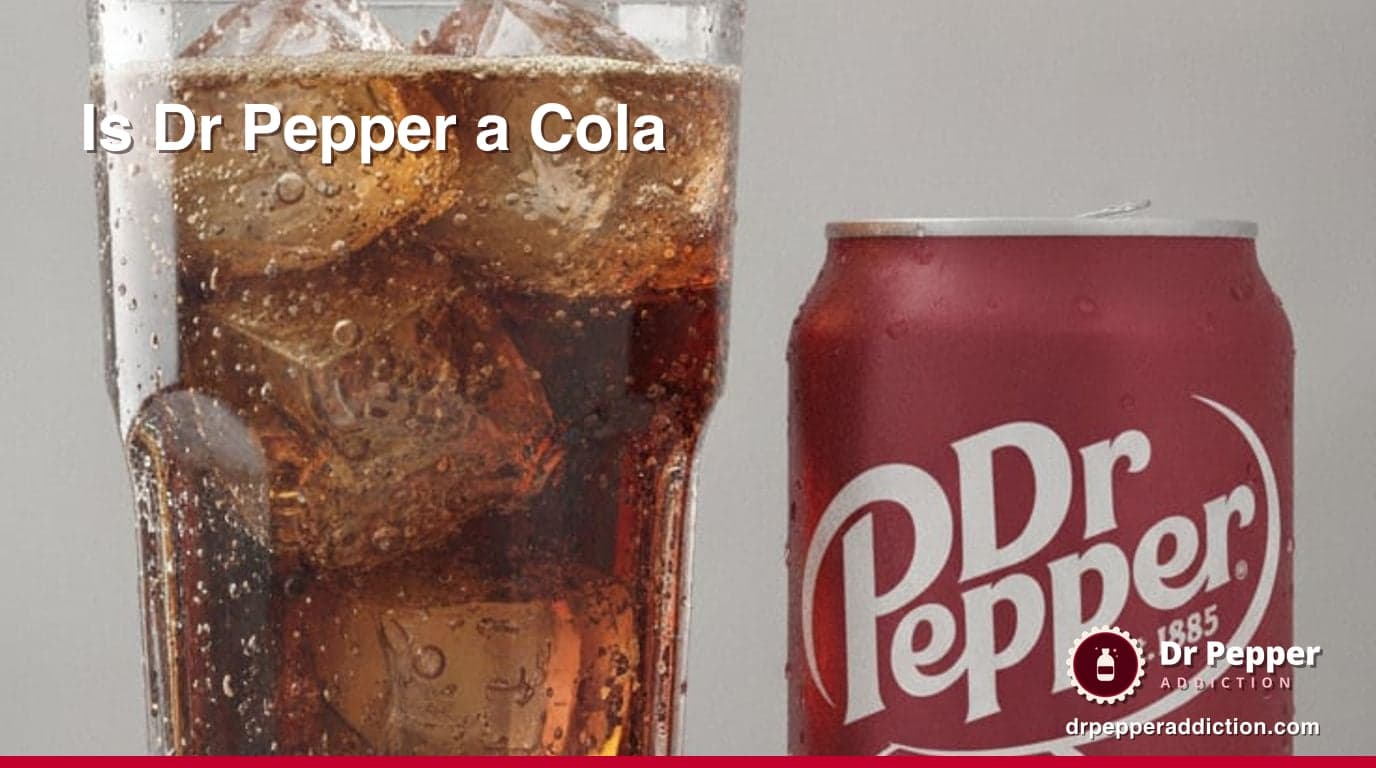
No, Dr Pepper is not a cola. It is a "pepper soda," a category it essentially created, built on a secret 23-flavor blend rather than the cola recipe of vanilla, cinnamon and citrus oils. It even won the point in court: a 1963 US District Court ruling that it was not a cola opened Coke and Pepsi bottlers to it.
What makes a cola a cola?
A cola is a specific style of soft drink. Its main flavorings are vanilla, cinnamon and citrus oils (orange, lime and lemon), with an acidic bite, and the name comes from the kola nut, which originally supplied the caffeine, though modern colas generally get their caffeine elsewhere, per Wikipedia's cola entry. That is the template Coca-Cola and Pepsi both follow, and it is why they taste recognizably similar to each other even though their exact recipes differ.
Dr Pepper is not built on that template. Its flavor does not center on the citrus and vanilla profile of a cola, and it has never been sold as one. Its label discloses the flavoring only as "natural and artificial flavors," per Keurig Dr Pepper's product facts. Instead it leans on a proprietary blend the company has branded as 23 flavors. That is the core reason it earns its own category rather than being lumped in with the colas.
"Pepper" sodas are their own category
In the soda world, Dr Pepper essentially defines a category sometimes called "pepper" sodas. These are dark, sweet, spiced soft drinks that are clearly not colas and clearly not fruit sodas either. Dr Pepper is the original and by far the most famous example, and the category is even named after it. Other drinks in the same style, such as Mr. Pibb and Dublin Original, are described as pepper sodas too, per Wikipedia's Dr Pepper entry. So when someone asks "what kind of soda is Dr Pepper," the most accurate answer is not "a cola" but rather "a pepper soda, in a class largely of its own."
The 1963 court ruling: officially "not a cola"
This is not just fan pedantry. For decades, bottlers that worked with Coke or Pepsi steered clear of Dr Pepper, fearing it would break agreements that barred them from partnering with a competitor, which kept Dr Pepper mostly in Texas and nearby states. When Pepsi-Cola sued Dr Pepper for trademark infringement (CNN's account), Dr Pepper countered, and in 1963 a judge ruled for the bottler. Dr Pepper had argued effectively in a US District Court that it was not a cola, and that opened Coke and Pepsi bottlers to it, according to CNN's history of the brand, which quotes D Magazine and the Federal Trade Commission. That ruling is a big part of how Dr Pepper went national.
It is also why you will sometimes see a Coke or Pepsi bottler delivering Dr Pepper today. That is a distribution deal, not ownership: neither company owns the brand, as explained in who owns Dr Pepper.
How does Dr Pepper taste different from a cola?
This is where the difference becomes obvious on your tongue. A cola tastes bright and citrusy with a vanilla backbone. Dr Pepper tastes darker, richer, and more like a spice cabinet. The notes most people can reliably pick out are below; the full rundown of what may be in the blend is in the 23 flavors of Dr Pepper.
- Cherry and a dark, jammy fruit sweetness
- Almond or amaretto, that distinctive nutty, marzipan like edge
- Warm baking spices, think nutmeg, clove, and a general gingerbread quality
It is sweet and complex without being citrusy, and it does not have the clean cola "bite" people know from Coke. That hard to pin down, almost old fashioned soda fountain character is exactly why people struggle to describe it, and it is also why myths spring up about secret ingredients. (For the record, no, it does not contain prune juice, despite the dark color fueling that rumor.)
If you want to taste the comparison yourself, grab a 12 pack of Dr Pepper cans and a few colas and try them side by side. (As an Amazon Associate I earn from qualifying purchases, at no extra cost to you.) The difference jumps out immediately.
Dr Pepper vs cola, side by side
| Dr Pepper | Cola (Coke / Pepsi) | |
|---|---|---|
| Category | Pepper soda | Cola |
| Flavor base | Secret "23 flavors" blend | Vanilla, cinnamon, citrus oils |
| Taste profile | Cherry, almond, warm spice | Citrus, vanilla, cola bite |
| First sold | 1885, Waco | Coca-Cola 1886, Atlanta; Pepsi 1893, New Bern, NC |
The Dr Pepper vs Coke vs Pepsi comparison goes deeper into the head to head flavor and history if you want the full breakdown.
A little history (and why "oldest" matters)
Part of why Dr Pepper is not a cola is simply that it came first and was never trying to be one. Dr Pepper was created, made and sold beginning in 1885 at Morrison's Old Corner Drug Store in Waco, Texas, where a young pharmacist named Charles Alderton is believed to have invented it.
That date is not trivia for its own sake. Coca-Cola's first glass was poured in Atlanta in May 1886, per The Coca-Cola Company, and Pepsi was first mixed in New Bern, North Carolina in 1893, per NCpedia. That makes Dr Pepper "the oldest of the major brand soft drinks in America," as the Dr Pepper Museum puts it. So Dr Pepper was not a spinoff or imitation of a cola. It was its own original creation that arrived before the cola giants did. The Charles Alderton story is well documented if you want to read more about the inventor himself, and if you want to see it in person, I cover tickets, hours and what is inside in visiting the Dr Pepper Museum.
Then why do people think it is a cola?
Three reasons, mostly. First, the color. Dr Pepper is dark, like a cola, so it gets visually filed alongside Coke and Pepsi. Second, the carbonation and caffeine. It is a fizzy, caffeinated soda with caramel color and phosphoric acid on the label, which checks the same surface boxes as a cola. Third, marketing and shelf placement. It competes directly with colas and sits right beside them in the cooler, so people group them together out of habit. None of that changes the actual flavor formula, which is not cola based.
If you want to explore the rest of the lineup, the full list of Dr Pepper flavors shows how far the brand has stretched the original idea, from Cherry to Cream Soda, none of which turn it into a cola.
Frequently asked questions
Is Dr Pepper a cola or not?
Not a cola. It is a separate category of soft drink, a "pepper" soda, built on a unique 23 flavor blend rather than the vanilla, cinnamon and citrus cola recipe. A US District Court agreed in 1963.
What kind of soda is Dr Pepper?
It is a dark, sweet, lightly spiced soft drink in its own category. People describe it as a pepper soda, and it is the oldest and most famous example of that style.
Is Mr. Pibb a cola?
No. Mr. Pibb is Coca-Cola's pepper soda, named in 1972 after Dr Pepper sued over its original name, Peppo, and it sits in the same pepper-soda category as Dr Pepper, per Wikipedia. For how Dr Pepper stacks up against the real colas, see Dr Pepper vs Coke vs Pepsi.
Why was Dr Pepper ruled not a cola?
Because it mattered for distribution. Coke and Pepsi bottlers avoided Dr Pepper for fear of breaking agreements not to partner with a competitor, so a 1963 ruling that Dr Pepper was not a cola opened those bottlers to it, which helped the brand go national.
Is Dr Pepper older than Coca-Cola?
Yes. Dr Pepper was first sold in 1885, a year before Coca-Cola went on sale in 1886, which makes Dr Pepper the oldest major soft drink brand in the United States, according to the Dr Pepper Museum.
The bottom line
Dr Pepper is not a cola, and a federal court said so in 1963. It is the original pepper soda, invented in 1885 in Waco, built on a secret 23 flavor blend that leans cherry, almond, and warm spice rather than the citrus and vanilla of a cola. It looks like a cola in the glass and competes with colas on the shelf, but one sip makes the difference obvious. If you want to taste it for yourself, a pack of Dr Pepper and a side by side with Coke will settle the question fast.