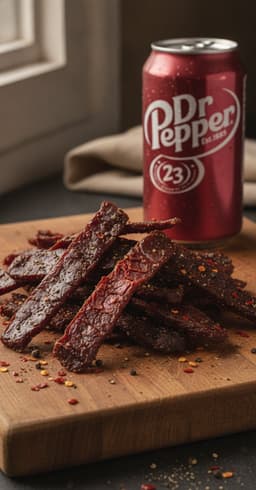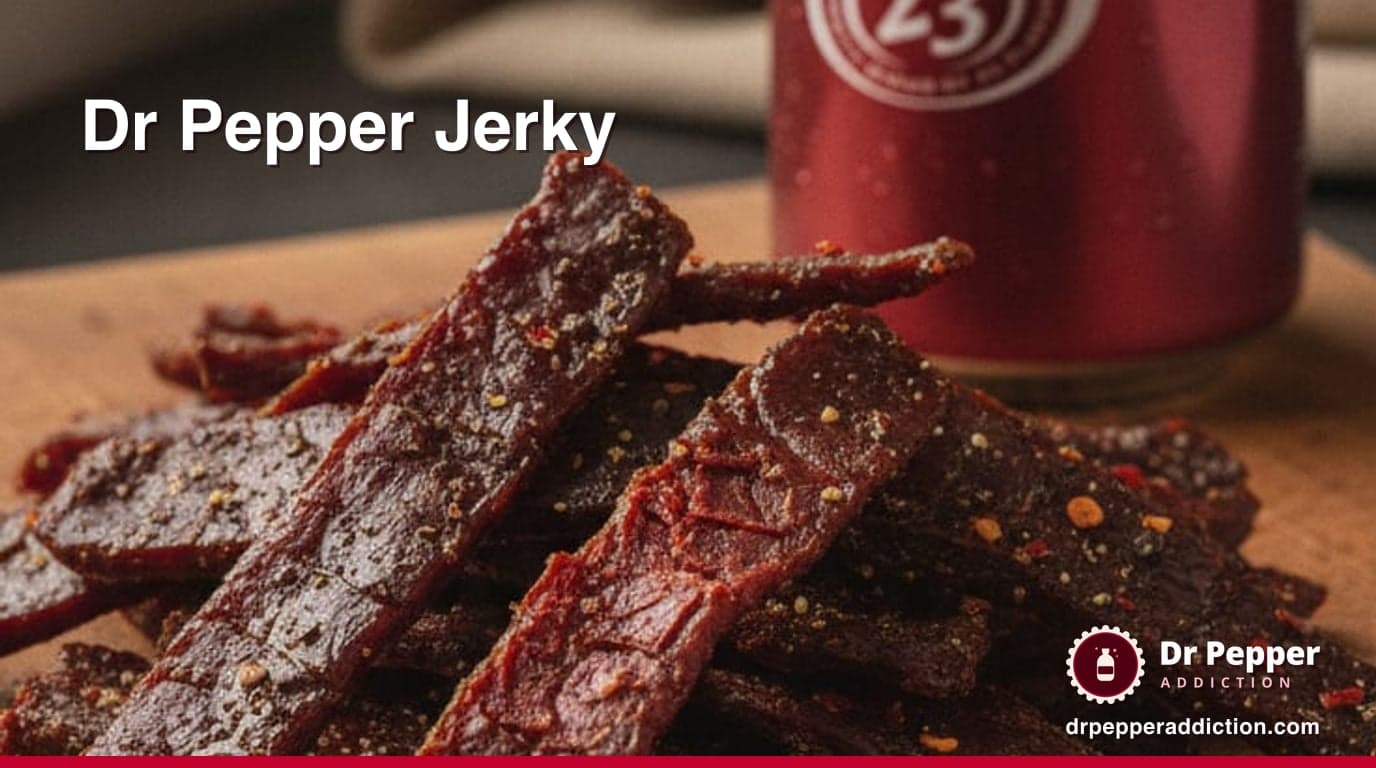
Dr Pepper jerky is lean beef sliced 1/4 inch thick, marinated overnight in Dr Pepper, soy sauce and spices, boiled in that marinade until the meat reaches 160°F, then dried at 140°F until a strip cracks when you bend it. The heating step before drying is what makes homemade jerky safe, and it is the USDA's current recommendation. I would expect the soda to add a sweet-salty edge and a faint cherry note behind the soy and black pepper.
This is the standard method, written up from how Dr Pepper jerky is usually made and from the food-safety guidance below, rather than a batch I have taken through my own kitchen yet. Treat my seasoning and drying time as a starting point.
Is homemade jerky safe?
It is when you follow the heating step. The USDA's Jerky and Food Safety page says its current recommendation is to heat meat to 160°F and poultry to 165°F before dehydrating, then dry at a steady 130°F to 140°F. It explains that a dehydrator may never get the meat that hot on its own, and that marinating alone does not make raw meat safe. The National Center for Home Food Preservation gives a practical way to do that heating: bring the strips and marinade to a boil and boil for 5 minutes, checking that strips reach 160°F. That is the method I use in the card.
What cut of beef is best for Dr Pepper jerky?
Eye of round is the usual choice: very lean, inexpensive and even in shape, so the slices dry at a similar rate. Top round and bottom round work too. Fat does not dry and goes rancid, so trim it all off. A brisket flat or chuck roast is better spent on Dr Pepper brisket or a Dr Pepper pot roast.
How do you make jerky in the oven without a dehydrator?
Heat the strips in their marinade to 160°F first, exactly as for a dehydrator. Then lay them on wire racks set over rimmed baking sheets so air reaches both sides, and dry them in an oven held at 140°F, the temperature the National Center for Home Food Preservation uses for both ovens and dehydrators. Use an oven thermometer to check it actually holds that temperature, and start testing pieces after 3 hours.
What does Dr Pepper jerky taste like?
I would expect it to be sweeter and darker than a plain soy-and-pepper jerky, with a slightly sticky finish from the soda's sugar and a faint cherry note at the end, while the soy keeps it savory. Boiling in the marinade also changes the look: NCHFP notes that preheated strips differ in color and texture from traditional jerky. If you like the flavor idea, the same pairing goes onto grilled steak in my Dr Pepper marinade, and there are more savory ideas in the Dr Pepper recipes.
Frequently asked questions
How long should you marinate beef jerky in Dr Pepper?
Eight to 24 hours in the refrigerator. Overnight is a good middle. Longer marinating can make the jerky saltier than some people like.
What temperature do you dry Dr Pepper jerky at?
Heat the strips to 160°F first, then dry them at 140°F. The USDA recommends that 160°F heating step before dehydrating and a steady 130°F to 140°F while drying.
How do you know when jerky is done?
Take a strip out, let it cool, and bend it. It should crack but not break, which is the test the National Center for Home Food Preservation gives.
Can you make Dr Pepper jerky with Diet Dr Pepper?
You can. I would expect it to still taste of Dr Pepper but to come out less sweet, since there is no sugar in the soda. If you want some of that sweetness back, add an extra tablespoon of brown sugar to the marinade.
How long does homemade jerky last?
The National Center for Home Food Preservation says properly dried jerky keeps two weeks at room temperature in a sealed container and recommends refrigerating or freezing it for longer. The USDA says home-dried jerky can be stored 1 to 2 months.